From Uvalde to Kerr County, members organized large-scale volunteer efforts, partnered with local leaders and provided thousands of hours of service following devastating floods.
In the aftermath of historic flooding across South and Central Texas in July, members of The Church of Jesus Christ of Latter-day Saints mobilized to help their neighbors. Volunteers in Uvalde sustained a weeks-long cleanup effort, while the La Cantera Stake organized a two-day volunteer blitz that brought hundreds of members into Kerr and Kendall counties.
Uvalde Stake Leads Massive Flood Recovery Effort
Tired but grateful, Uvalde Stake President Brady Williams was in his office reviewing the events of the past two weeks.
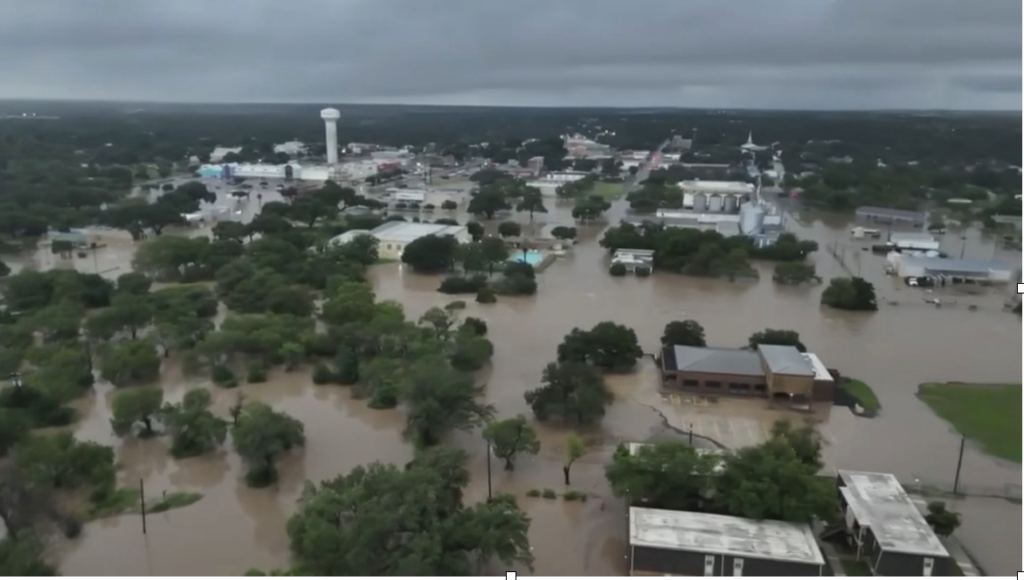
“In a 24-hour period starting Sunday, July 12, it not only rained upstream in the El Paso area but a big rain band came right here just north of us in Uvalde. During that time, we got 31 inches of rain.” The 500-year flood not only hit the town, but it left four feet of water at his ranch, trapping Williams and his wife.
The next day they made it out and returned to their home in Uvalde. But then more water surged downstream from flooding in West Texas.
“Our rivers rose 28 feet,” said Williams. “The Nueces River comes right through our town. It had been dry for seven or eight years. After the rain it was four miles wide.”
The water was coming at 300,000 cubic feet per second. That’s twice the flow of Niagara Falls.
“The Leona River is usually a small little river, but it was more than a mile wide and flooded so many homes,” President Williams said. “We opened the church building for evacuees, but the church was isolated. People in Uvalde were stuck where they were because of the flooding. You couldn’t travel through town anywhere. By Thursday, you could start getting to a few places but not very many.”
The Texas Department of Public Safety used the stake center as a command facility for a short time until existing public facilities recovered.
“Finally on Friday, July 17, we started working with the city to start mucking out and cleaning up,” Williams remarked. “We had 193 people show up the next day. We took care of 10 homes that day, including some very large homes.”
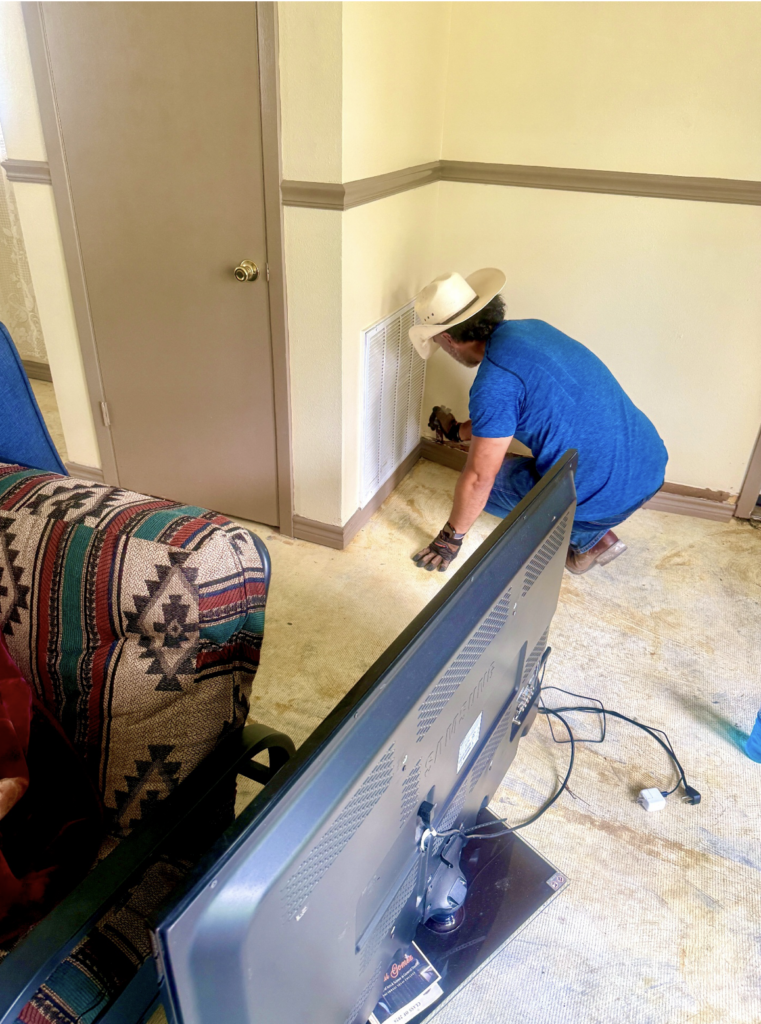
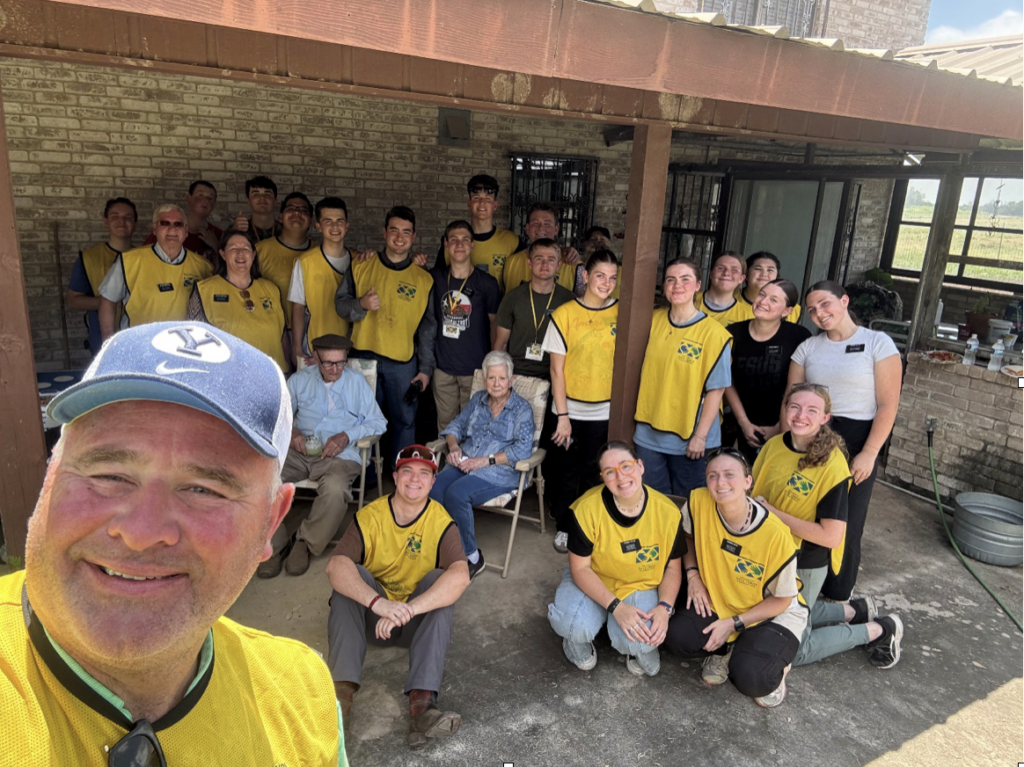
From July 18 through July 29, the Uvalde Stake had anywhere from 80 to 300 volunteers reporting for work at the stake center. These volunteers came from Austin, San Antonio, Corpus Christi, and Laredo in addition to the smaller cities within a 60 mile radius of Uvalde. They put in over 13,000 hours of work.
“Uvalde City Hall calls us their Mormon Army,” Williams chuckled. “They’ve been very grateful. We’ve crossed the aisle working together with other faiths. The Southern Baptist Temple Church reached out joined us in cleaning out homes.” Our efforts healed some prior interfaith reluctance about the Latter-day Saints.
On another assignment, the members got the directions mixed up and went down a back road and ran into a man in desperate need of help.
“We got 25 people out to help him. He broke down, cried and said, ‘I knew God would answer my prayers.’ We were sent to the wrong place for the right reason.”
Williams thought for a minute and said, “The Lord will break down barriers with a flood or a blizzard. It was horrible, but it was wonderful. There are no coincidences in the gospel of Jesus Christ.”
La Cantera Stake Organizes Volunteer ‘Blitz’ to Help Neighbors in Need
While much of the Church’s organized volunteer efforts focused on the cleanup in Uvalde, as reports came in about significant property damage in Kerr and Kendall Counties, the La Cantera Stake Presidency recognized the need to focus their members’ efforts in their home stake.
For the second year in a row, members in the stake’s area were dealing with a severe flood.
In July 2025, Kerrville sustained devastating flooding that killed more than 130 people as more than 12 inches of rain fell in a concentrated area, causing the Guadalupe River to rise 29 feet in just a few hours while people slept. The Texas Division of Emergency Management along with several local governing entities initially asked volunteer organizations to stay away while they searched for flood victims. Then, federal and state agencies arrived. With substantial national attention on the area, volunteer groups were showing up faster than officials could manage them. While members volunteered individually, the Church was not authorized to coordinate an organized volunteer effort because the emergency relief organizations were already overwhelmed.
“That was hard on our members,” said Ben Thatcher, Second Counselor in the La Cantera Stake Presidency. “People saw a catastrophe in their own county in 2025, wanted to help, and could not understand why their stake was not organizing anything.”
This year’s flooding was different. The same weather system impacting the Nueces River and Uvalde was large enough to also impact north into the Guadalupe River and Cibolo Creek. The amount of rain was significantly more than in 2025, and was more sustained as it fell over several days and over a broader area. Fortunately, it resulted in much less loss of life. Flooding, however was much worse and property damage impacted a much larger area of the Texas Hill Country. This year, volunteers were essential, and the Church was welcomed as a known, rapidly available, and organized partner.
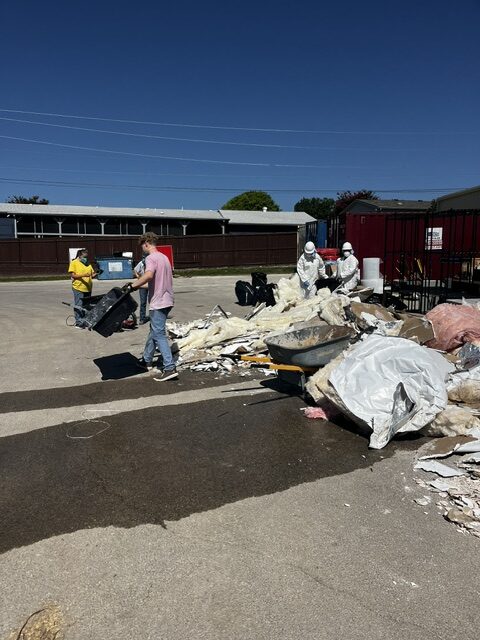
While the efforts in Uvalde were spread over a couple of weeks, the La Cantera Stake called their efforts in Kerr County a “blitz.” The Boerne area became the staging ground, and Kerr County became the principal work site, with additional service in Comfort and Kendall County.
Thatcher said the stake presidency made the decision to mobilize the stake late on a Tuesday night. The next night, they held a virtual meeting with bishops, elders quorum, Relief Society presidents, ward emergency preparedness specialists and stake council leaders. During that meeting, they set volunteer targets, determined team structures and asked for ward team leaders. They also figured out supply logistics and outlined what Sunday meetings would look like.
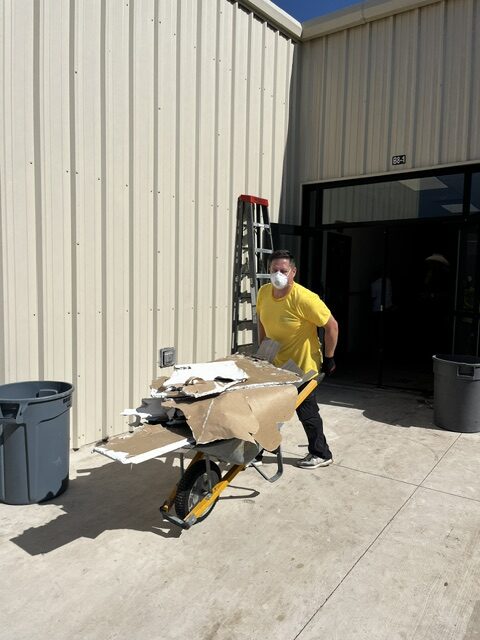
Early on Saturday, July 25, approximately 420 volunteers, including men, women and teens, gathered at the Kerrville meetinghouse for their assignments, along with a semi-trailer full of cleaning supplies, masks and sleds from the Church storehouse, arriving just a day after it was requested.
President James W. Bramwell, who leads the Texas San Antonio North Mission, authorized sixty missionaries from three coordinating council stakes on Saturday and sixty more from three other stakes on Sunday.
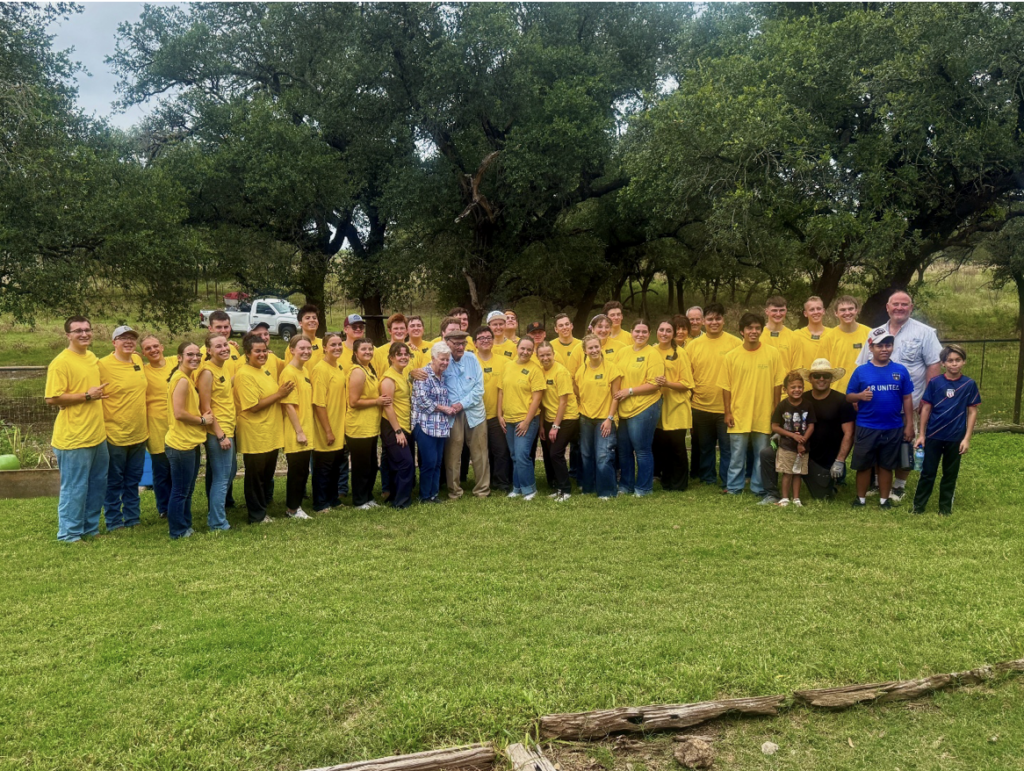
The volunteers worked in teams of six to ten; each was paired with a missionary companionship. Zone leaders covered four or five teams each, checking on them in the field and bringing them water and Gatorade. They helped solve problems in the field rather than routing everything back to the command center.
Each team’s work assignments were determined by a ticketing system, keeping workers focused on specific work orders that were clustered geographically, rather than conducting broad neighborhood sweeps.
The stake Relief Society president, Cristina Wadsworth, and her presidency were critical during the operations, running the command center, tracking welfare needs and coordinating supplies and meals.
On Sunday, the volunteer numbers grew to about 550.
Stake leaders made the decision to amend the typical Sunday meeting schedule, restructuring worship across the stake. Ten units were consolidated into three sacrament meetings. Second-hour meetings were canceled. The stake provided the presiding leaders so that as many members as possible could continue to serve in the community.
The stake also held two 15-minute worship services for volunteers in Boerne and Kerrville, allowing time for prayer, singing, sacrament and brief remarks.
“Members received the sacrament and served a full day, and no one was asked to choose between worship and work,” Thatcher said.
Over the two-day effort, the teams completed an estimated 250 work order tickets. Stake leaders estimate that between 8,000 and 8,500 volunteer hours were contributed in Kendall and Kerr Counties in the two weeks following the flooding.
Volunteers recounted stories of gratitude from their neighbors, including tears of gratitude from a rancher and sentiments from the mother of a family whose home and daycare were damaged, who said the service transformed what had felt like destruction into a reminder of God’s faithfulness.
Some of the volunteers had their own homes damaged. They served over the weekend, waiting until later in the week for their own homes to be mucked out.
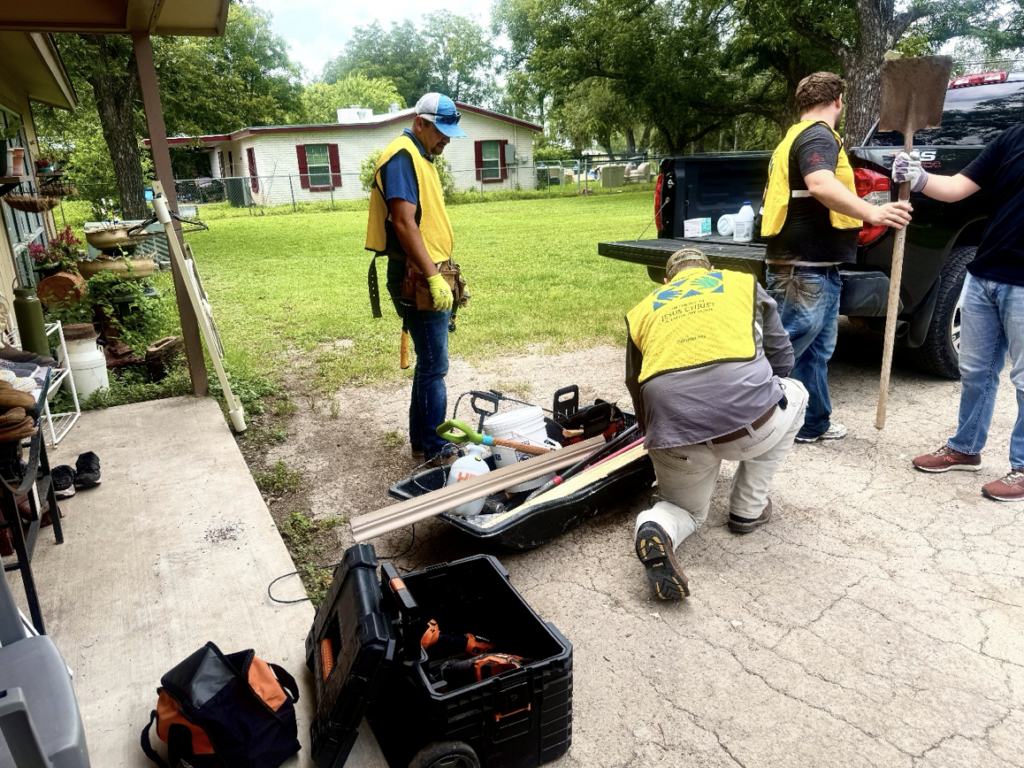
In Comfort, a group of Church members and a team of City of Boerne employees melded into one unified volunteer work crew.
Several friends of the full-time missionaries worked alongside members through the blitz. Two of them were baptized that Sunday, at the end of a day spent cleaning out houses that were not theirs.
“That reciprocity did more for humility in this stake than any lesson we could have taught,” Thatcher said.
Not everyone who wanted to volunteer was able to do physical labor. They offered essential support to the command center, logistics, phones, nursing station and conducted follow-up research on incomplete tickets. Providing meaningful assignments for those unable to perform physical labor was essential, not only for the project’s success but also so that every member could contribute.
Thatcher, who is Boerne’s city manager, said another takeaway from the service blitz was that the coordinated efforts relied on community relationships that already existed with county, city and local nonprofit leaders.
The stake worked with a wide set of partners: the City of Boerne Emergency Operations Center and municipal departments, the Texas Division of Emergency Management, Hill Country Family Services, Kerr Cares, Kendall County reporting systems, the Area Authority office, Area communications leadership, neighboring stakes and coordinating-council leadership, mission leadership, and the Dallas storehouse and warehouse partners.
Because of his role in local government, Thatcher had direct access to municipal emergency operations. But he stressed that every ward and stake should be actively involved in their communities so that those relationships exist before there is a disaster or emergency.
“The relationship has to exist before the disaster, because there is no time to establish one during it,” Thatcher said.
Stronger Through Service
The floods left behind damaged homes and disrupted lives, but they also created opportunities for people to serve one another and strengthen lasting community connections.
Many described the experience as feeling much like a stake activity, fostering a deep sense of unity and purpose as they worked alongside ward and stake members, missionaries and neighbors. In the process, they demonstrated how Christlike love can strengthen a community long after the floodwaters recede.